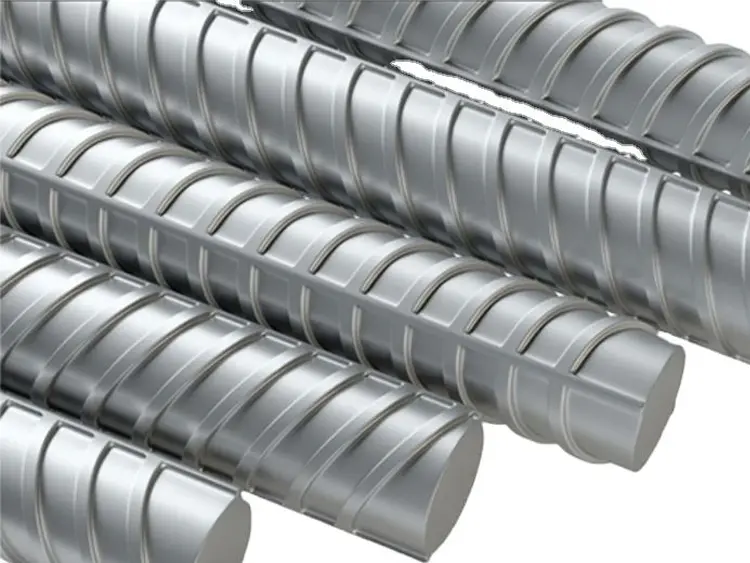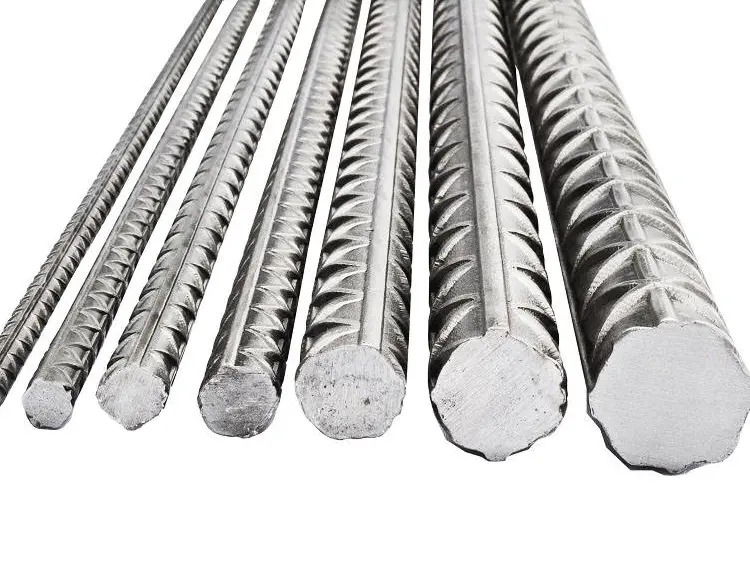
A buyer in Accra asks for "500 tons of 12 m rebar in 20ft containers". There is a problem: a 12 m bar is about twice as long as the inside of a 20ft box. With rebar, weight and length limit the load, not volume. Here are the numbers to check before choosing containers or a bulk vessel.
Weight, not volume, sets the load
Steel is so dense that a full load of rebar takes up only a small part of a container's volume. The limit is always the payload, and very often the road weight limit at the destination is lower than that.
| Container | Typical inside length | Typical tare | Typical max payload | Rebar commonly loaded |
|---|---|---|---|---|
| 20ft standard (GP) | about 5.90 m | about 2.2 t | about 28 t | 25–27 t |
| 40ft standard / high cube | about 12.03 m | about 3.7–3.9 t | about 26.5–28.5 t | 25–27 t |
Exact tare and maximum gross mass are on each container's CSC plate. Two points matter more than the table:
- A 40ft container does not carry twice as much rebar as a 20ft. It carries about the same tonnage, because both are weight-limited. Its advantage is length, not capacity.
- Inland trucking limits often decide the load. Many African and Middle Eastern road authorities enforce axle loads that keep a loaded box well below the container's rating. Ask your clearing agent what gross weight a truck may legally carry from the port to your yard. That figure, less the container tare, is your real payload.
Under SOLAS rules in force since 2016, every export container needs a Verified Gross Mass (VGM) before loading, so declare real weights, not theoretical ones.
The length problem and three ways around it
Chinese mills normally roll rebar in 9 m and 12 m lengths, and most overseas projects ask for 12 m. That gives three options:
- Cut to fit a 40ft container. A 12.03 m inside length leaves no room to slide a 12 m bundle past the door frame. Exporters therefore usually supply 11.8 m or 11.9 m bars. Agree on this length in the contract, because your bar schedules must be calculated with it.
- Use 9 m or shorter lengths in a 20ft container. A 20ft box takes bars up to roughly 5.8 m. That suits 6 m stock lengths for hardware shops. It does not suit contractors who want long bars to reduce lap splices.
- Bend 12 m bars in half (a "U" or hairpin) to fit a 20ft container. Freight is cheaper, but the bars have to be straightened on site. Many engineers will not accept re-straightened bar in structural members, and cold bending and re-bending can crack higher grades. Only accept this if your customer agrees in writing.
Small diameters (6–10 mm) also come in coils, which load into a 20ft box without any length problem.
Bundles: how big and how many
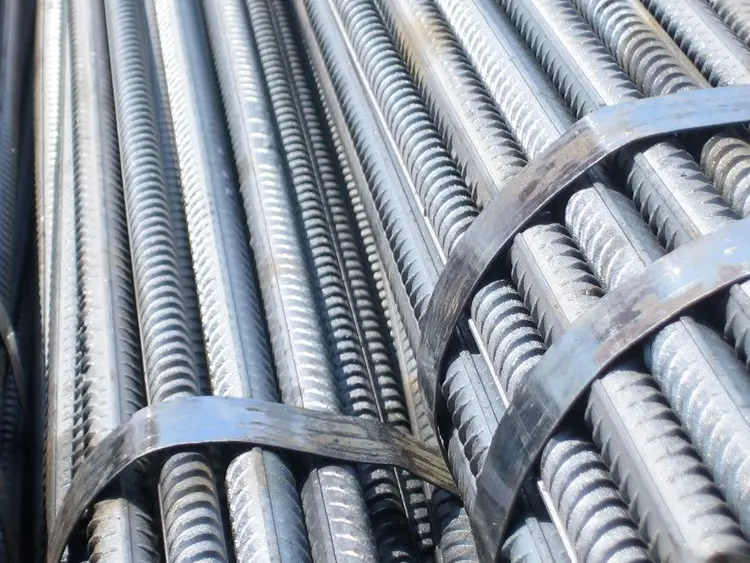
Straight rebar leaves the mill in bundles that are tied with wire or steel straps at several points along their length. Bundle weight is not fixed by GB/T 1499.2, ASTM A615 or BS 4449. It depends on the mill and the handling equipment at both ends. Two to three tons per bundle is common for export. Write a maximum bundle weight into the contract if your crane or forklift needs one.
Every bundle should carry a metal tag showing standard, grade, diameter, length, heat number and bundle weight. These tags are what you check against the certificate on arrival. Our rebar shipment inspection guide walks through that check.
Pieces per ton of 12 m bar
Customers buy by the piece, but you buy by the ton. The table uses the nominal mass per metre (0.00617 × d² kg/m), which is used by both GB/T 1499.2 and BS 4449.
| Diameter (mm) | kg/m | kg per 12 m bar | Bars per ton (approx.) | Bars in 26 t (approx.) |
|---|---|---|---|---|
| 8 | 0.395 | 4.74 | 211 | 5,480 |
| 10 | 0.617 | 7.40 | 135 | 3,510 |
| 12 | 0.888 | 10.66 | 94 | 2,440 |
| 16 | 1.58 | 18.96 | 53 | 1,370 |
| 20 | 2.47 | 29.64 | 34 | 880 |
| 25 | 3.85 | 46.20 | 22 | 560 |
| 32 | 6.31 | 75.72 | 13 | 340 |
For 11.8 m bars, multiply the bar weight by 11.8 instead of 12; the bar count per ton rises by about 1.7%. Make sure your invoice states whether it is billed by theoretical weight (pieces × length × nominal kg/m) or actual weight (weighbridge). With bars rolled to the lower tolerance, the difference can reach several percent.
Loading a rebar container properly
- Timber bearers under every bundle. They spread the load over the floor cross-members and leave a gap for forklift tines or slings.
- Weight centred along the length. With 26 t in a 20ft box, an off-centre load can exceed the floor rating locally and makes the box hard to lift.
- Lashing to the container's lashing rings with steel strap or chain, plus wooden blocking at the door end. Loose bundles slide on a rolling ship and can push out the door panels.
- Mixed sizes: heaviest diameters at the bottom, with bundle positions on the packing list.
When break-bulk beats containers
For large orders, rebar travels loose in the holds of general-cargo or bulk vessels. Break-bulk handles full 12 m lengths without cutting or bending, avoids container weight limits and is usually cheaper per ton once a shipment reaches a few thousand tons. It also has drawbacks:
| Factor | Containers | Break-bulk |
|---|---|---|
| Bar length | Up to about 11.9 m (40ft) | 12 m and longer |
| Practical order size | From one 20ft (about 25 t) | Usually several thousand tons |
| Destination port | Any container port | Needs a berth and cranes or ship's gear for heavy lifts |
| Moisture and handling risk | Low; sealed box | Higher; condensation in the hold, sling damage, rain during discharge |
| Delivery to inland sites | Door delivery in the same box | Reloaded onto trucks at the port |
Break-bulk losses usually happen at discharge: tags torn off by slings, heats mixed on the quay, bars bent by crane work. Ask for paint marks on bundle ends by size or heat, and put a tally clerk on the quay.
Purchase order checklist
- Standard and grade, e.g. HRB400E or B500B (see our grade comparison)
- Bar length (12 m, 11.8 m, 9 m, 6 m) or coil, and whether bending to fit is permitted
- Maximum bundle weight and tag content
- Container type and maximum cargo weight per container for your inland route
- Theoretical or actual weight invoicing, and the weight tolerance
- Loading photos and VGM details sent with the shipping documents
For galvanized HRB400 rebar, take extra care with bearers and lashing: chafed zinc is damage your customer will see.
Frequently asked questions
How many tons of rebar fit in a 20ft container?
Usually 25–27 tons, limited by the container's payload and often further by road weight limits at the destination, not by space inside the box.
Can 12 m rebar be shipped in a 40ft container?
Not easily, because the inside length is only about 12.03 m, so exporters normally cut bars to 11.8 m or 11.9 m for 40ft containers.
Does a 40ft container carry more rebar than a 20ft?
Not much; both are weight-limited at roughly the same tonnage, so a 40ft container is chosen for bar length rather than extra capacity.
When is break-bulk shipping better for rebar?
When the order is several thousand tons, the bars must be full 12 m lengths, and the destination port can handle heavy steel lifts at the berth.
Need a quotation?
Send us the size, grade, quantity and destination port — we reply with a CFR/CIF price, usually within 24 hours.