Rebar is the steel product that importers in Africa, the Middle East and Southeast Asia buy most often, and the one where a wrong grade causes the most trouble. A shipment can be rejected at site, or a structural engineer can refuse to sign off. The three grades that come up most in quotations are HRB400 (China), B500B (Britain, BS 4449) and Grade 60 (USA, ASTM A615). Here is how they compare.
Strength side by side
| Grade | Min. yield | Min. tensile | Ductility requirement |
|---|---|---|---|
| HRB400 | 400 MPa | 540 MPa | Elongation ≥ 16%, Agt ≥ 7.5% |
| HRB400E (seismic) | 400 MPa | 540 MPa | Rm/Re ≥ 1.25, Agt ≥ 9%, actual Re ≤ 1.30 × nominal |
| HRB500 / HRB500E | 500 MPa | 630 MPa | As above |
| B500B (BS 4449) | 500 MPa | Rm/Re ≥ 1.08 | Agt ≥ 5% |
| B500C (BS 4449) | 500 MPa | 1.15 ≤ Rm/Re < 1.35 | Agt ≥ 7.5% |
| A615 Grade 60 | 420 MPa | 620 MPa | Elongation 7–9% by size |
| A706 Grade 60 | 420 MPa (max 540) | 550 MPa | Weldable, seismic |
Three points stand out:
- B500B is stronger than HRB400. Its minimum yield is 500 MPa against 400 MPa. The Chinese grade that matches it on strength is HRB500.
- Grade 60 sits in between, at 420 MPa minimum yield.
- "E" grades are about ductility, not just strength. Seismic zones, including parts of East Africa, the Gulf, Iran, Pakistan, Indonesia and the Philippines, need bars that stretch before they break. That is what HRB400E, B500C and A706 guarantee.
When can one grade replace another?
A substitution is always the structural engineer's decision. These are the common cases:
- HRB500E in place of B500B: usually accepted, because HRB500E meets or exceeds B500B's yield and ductility. You will still need the mill certificate and often a local lab test.
- HRB400 in place of Grade 60: the yield is 20 MPa lower, so engineers often refuse, or accept only with a design check. HRB400E sometimes gets approval where Grade 60 was specified for non-critical elements.
- HRB400 in place of B500B: not acceptable without a redesign, because it is 20% weaker in yield.
- Grade 60 in place of HRB400: fine on strength, but check the bar markings and rib geometry required by local inspectors.
Markings: how inspectors identify the bar
Each standard rolls identification into the bar surface:
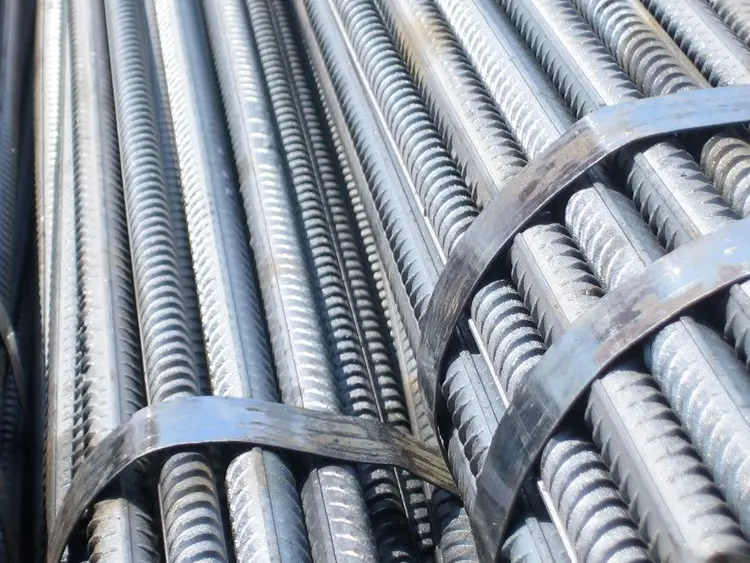
- GB/T 1499.2: grade code (for example "4" or "4E" for HRB400/400E), mill logo and diameter.
- BS 4449: rib pattern and "reading direction" marks that identify the country and mill. B500B and B500C use different rib arrangements.
- ASTM A615: mill letter, size number (for example "5" for #5 = 16 mm), "S" for A615, and a grade mark ("60" or one grade line).
If an importer declares B500B but the bars are marked as HRB400, the shipment can be held at customs or at the site gate. Make sure the pro-forma invoice, mill certificate and bar markings all name the same standard.
Sizes and weights are (almost) universal
Metric diameters from 6 to 32 mm have the same unit weights in all three systems (for example 12 mm = 0.888 kg/m and 16 mm = 1.58 kg/m). ASTM also uses bar numbers: #3 ≈ 10 mm, #4 ≈ 13 mm, #5 ≈ 16 mm, #6 ≈ 19 mm, #8 ≈ 25 mm. The full weight table is on our rebar product page.
Buying checklist
- Standard and grade exactly as in the structural drawings (including "E" or "C" suffixes).
- Diameters and quantity per size in tons, and whether pricing is by actual or theoretical weight.
- Length: 12 m for break-bulk, or 5.8 m / 6 m to fit 20ft containers.
- Certificates: EN 10204 3.1 mill certificate, plus SONCAP, SASO or KEBS documentation for your country.
- Coastal or marine structure? Consider hot-dip galvanized rebar. It costs more per ton, but repairing chloride-corroded concrete costs far more.
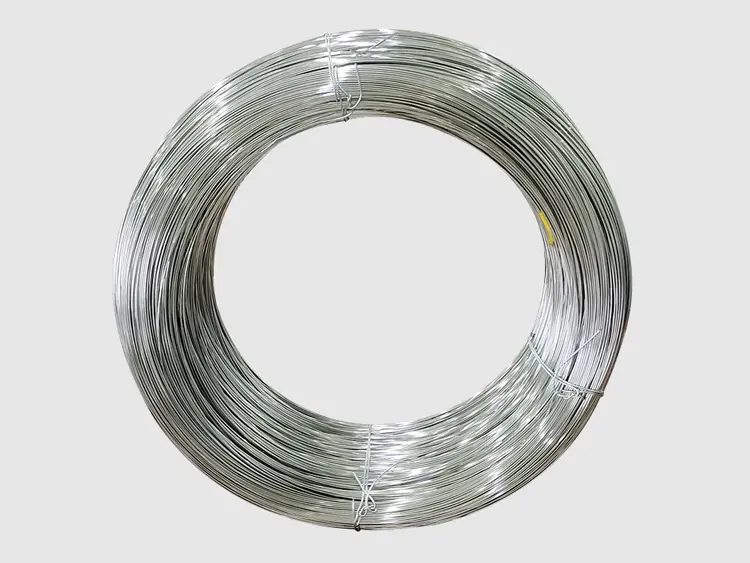
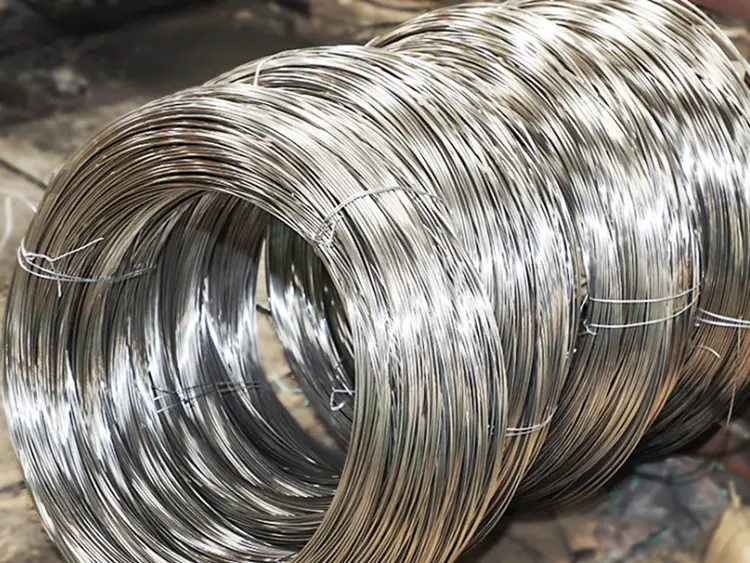
- Don't forget tie wire: about 5–8 kg of BWG 16–18 binding wire per ton of rebar is a common allowance.
Frequently asked questions
Is HRB400 the same as Grade 60 rebar?
No. HRB400 has a 400 MPa minimum yield and Grade 60 has 420 MPa. They are close, but a structural engineer must approve any substitution.
What is the Chinese equivalent of B500B?
HRB500 (or HRB500E for seismic zones) matches B500B on minimum yield strength. HRB400 is weaker and is not an equivalent.
What does the E mean in HRB400E?
E stands for earthquake-resistant. The bar must have a tensile-to-yield ratio of at least 1.25, at least 9% total elongation at maximum force, and an actual yield no more than 1.3 times the nominal value.
How much binding wire do I need per ton of rebar?
A common site allowance is 5–8 kg of soft annealed binding wire per ton of rebar, depending on bar size and spacing.
Need a quotation?
Send us the size, grade, quantity and destination port — we reply with a CFR/CIF price, usually within 24 hours.