Short answer for busy EPC buyers: lipped C-channel for posts and rafters on ground-mount tables, Z-purlin where long purlins must run continuously over several supports, and square or rectangular tube for carports, elevated structures and anything that has to look neat or resist twisting. Most real projects mix two of the three. The rest of this guide explains why, and what to write in the purchase order so the steel lasts as long as the panels.
Where each profile sits in a typical array
A fixed-tilt ground-mount table has three layers: foundation posts (piles or columns), inclined rafters, and horizontal purlins that carry the module clamps. Rooftop and carport systems use the same logic with different members.
| Member | Common choice | Why |
|---|---|---|
| Driven or concreted posts | Lipped C-channel, sometimes square tube | Easy to roll in long lengths, pre-punch for bolts and post-galvanize; open shape lets inspectors see corrosion |
| Rafters / inclined beams | C-channel | Bolts back-to-back with the post; holes punched before galvanizing |
| Module purlins, long rows | Z-purlin or C-channel | Z sections can be lapped over supports for continuity |
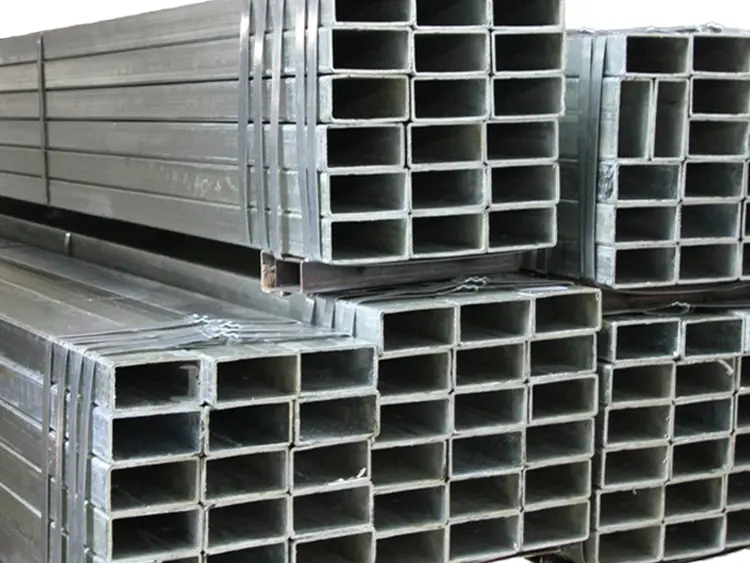
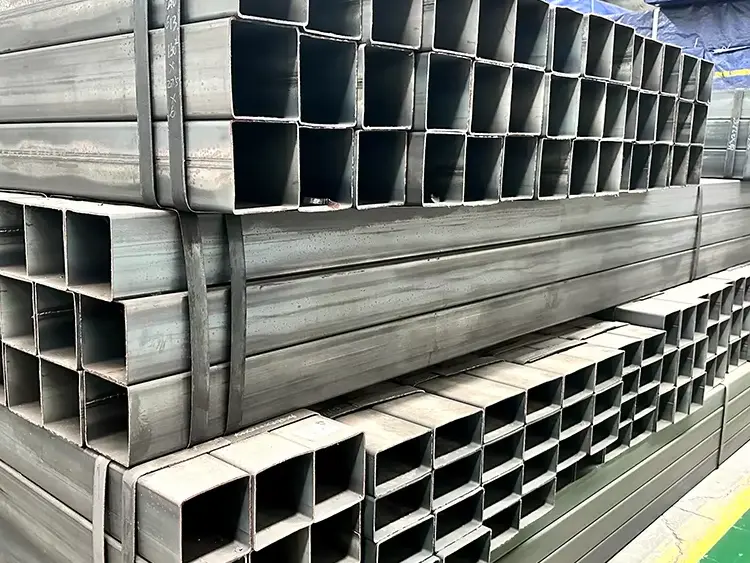
| Carport beams and columns | Rectangular and square hollow section | High torsional stiffness, clean appearance, fewer bracing members |
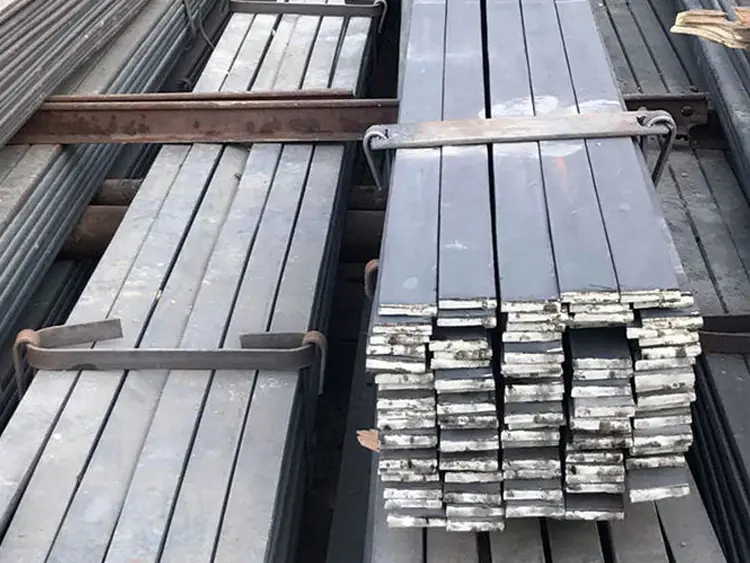
| Bracing | Small C, angle, or flat bar | Light tension and compression members |
| Rooftop rails | Strut-type C-channel (often 41 × 41 mm) or aluminium rail | Slotted channel accepts spring nuts for fast clamping |
How the three profiles behave
Lipped C-channel
Cold-formed from strip, usually 1.5 to 3.0 mm thick for solar work. The lips stiffen the flanges so the thin section does not buckle locally. Its weakness is twisting: the shear centre lies outside the web, so a C loaded through its flange tends to rotate. Designers handle this with bracing or by pairing sections back-to-back. For posts it is the default because a roll-forming line can punch, cut and form in one pass, which keeps cost per ton low.
Z-purlin
Also cold-formed, with flanges pointing in opposite directions. The key advantage is that Z sections can overlap (lap) at each support, which turns a series of simple spans into a continuous beam and reduces bending moment at mid-span. On long east–west rows this saves steel. Z sections also nest inside each other for transport, so more metres fit in the same volume. The trade-off: Z-purlins bend about inclined principal axes, so under wind uplift they need sag rods or clamps to stop sideways movement. They should be used with a design that accounts for this, not swapped in for a C of the same depth.
Square and rectangular tube
A closed section has far higher torsional stiffness than an open C or Z of similar weight, so it resists twisting from wind on large carport canopies and single-post trackers. Tube is usually made to EN 10219 or ASTM A500; our A500 Grade B vs Grade C guide covers the strength differences. Downsides: it costs more per ton than roll-formed open sections, it takes up more volume in a container, and the inside of a closed tube is hard to coat and inspect. If a tube is hot-dip galvanized after fabrication, it needs vent and drain holes so molten zinc can flow through and out.
Coating decides the service life
A solar plant is built for 25 years or more. For most sites, coating choice matters more than which profile you pick. Zinc corrosion rates by atmosphere are given in ISO 9223:
| ISO 9223 category | Typical setting | Zinc loss per year |
|---|---|---|
| C2 | Dry inland, desert away from coast and industry | 0.1–0.7 µm |
| C3 | Urban, mild coastal | 0.7–2.1 µm |
| C4 | Industrial, coastal with moderate salt | 2.1–4.2 µm |
| C5 | Heavy industry, coastal with high salt | 4.2–8.4 µm |
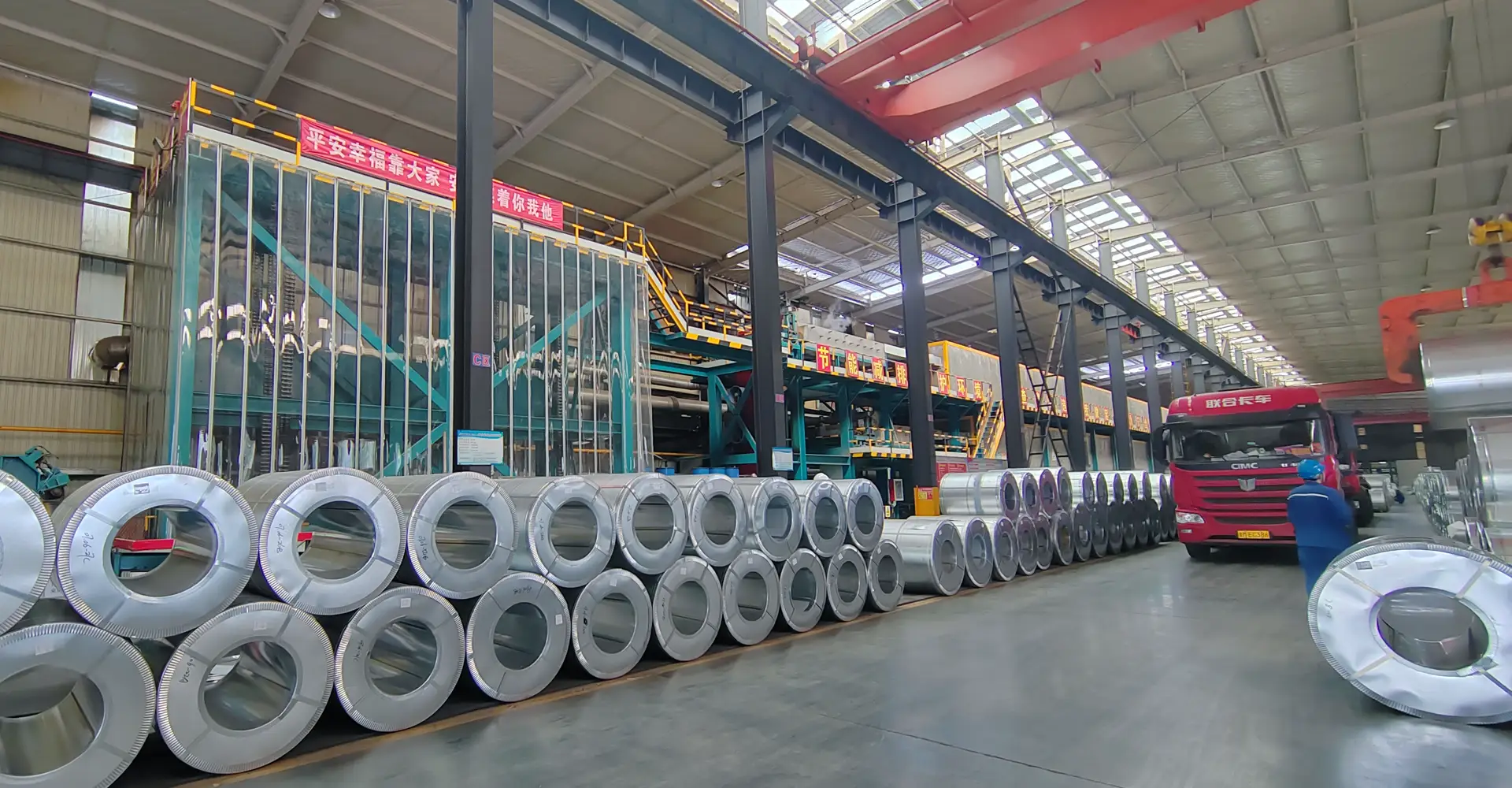
Compare those rates with coating thickness. Hot-dip galvanizing after fabrication to ISO 1461 requires a minimum mean coating of 55 µm on steel over 1.5 to 3 mm thick, 70 µm on 3 to 6 mm, and 85 µm above 6 mm. Pre-galvanized strip at Z275 (EN 10346) carries 275 g/m² over both sides, only about 20 µm per side. At a C4 coastal site that thin layer may last well under the life of the plant, and every punched hole and cut end is bare steel from day one.
Practical rule: pre-galvanized or zinc-magnesium-aluminium coated sections are used for light-duty members in dry C2–C3 sites; posts, anything in contact with soil, and all members at coastal or industrial sites should be hot-dip galvanized after punching and cutting. Soil contact is its own problem; zinc corrosion in the ground depends on moisture, chlorides and resistivity, so ask the geotechnical engineer for soil data before fixing pile coating.
Steel grades you will see on drawings
- S350GD, S420GD (EN 10346): coated strip for cold-formed C and Z sections; the number is minimum yield in MPa.
- S235JR, S355JR (EN 10025-2): hot-rolled strip used for sections that are galvanized after forming.
- Q235B, Q355B (GB/T 700, GB/T 1591): Chinese equivalents, minimum yield 235 and 355 MPa at small thicknesses.
- ASTM A500 Grade B/C, EN 10219 S355J2H: hollow sections for carports and trackers.
Do not accept a lower grade with "same thickness" as a substitute. Cold-formed solar members are designed close to their limit, and a 235 MPa section in place of a 350 MPa one has about one third lower yield strength.
Shipping notes
- Z-purlins nest; C-channels can be packed toe-to-toe. Both load densely. Square tube is bulky, so a 40ft container often runs out of space before it reaches its weight limit with large sections.
- Galvanized members packed wet or tightly strapped together can develop white rust in transit. Ask for spacers between layers and a dry container.
- Pre-punched members must be bundled by part number with tags that match the assembly drawing. Mixed bundles cost days on site.
Purchase order checklist
- Profile drawing with dimensions, thickness and hole pattern for every part number.
- Steel grade and standard, e.g. S350GD or Q355B.
- Coating: process (pre-galvanized, ZM, or hot-dip after fabrication) and the minimum coating mass or thickness to the named standard.
- Length tolerance and hole-position tolerance; misaligned holes stop assembly.
- Mill test certificate and a coating thickness report.
- Packing by part number, with bundle tags and a packing list matching the drawings.
For carport and elevated structures, see our hot-dip galvanized square tube and pre-galvanized square tube pages, and send your bill of materials for a quotation.
Frequently asked questions
Is C-channel or Z-purlin better for solar mounting structures?
C-channel suits posts and rafters, while Z-purlin suits long purlin runs where sections can be lapped over supports for continuity; many projects use both.
Is pre-galvanized steel good enough for solar mounting?
For light members at dry inland sites it can be, but posts, soil-contact members and coastal sites usually need hot-dip galvanizing after fabrication.
What zinc coating thickness does ISO 1461 require?
The minimum mean coating is 55 µm for steel over 1.5 to 3 mm, 70 µm for 3 to 6 mm, and 85 µm for steel thicker than 6 mm.
When should square tube be used instead of C-channel in solar structures?
Use square or rectangular tube for carports, elevated canopies and single-post designs where torsional stiffness and appearance matter.
Need a quotation?
Send us the size, grade, quantity and destination port — we reply with a CFR/CIF price, usually within 24 hours.