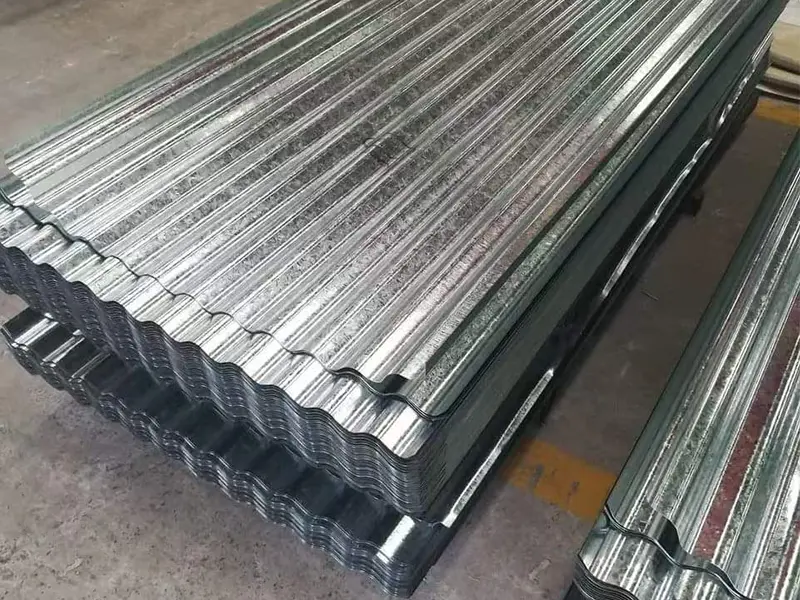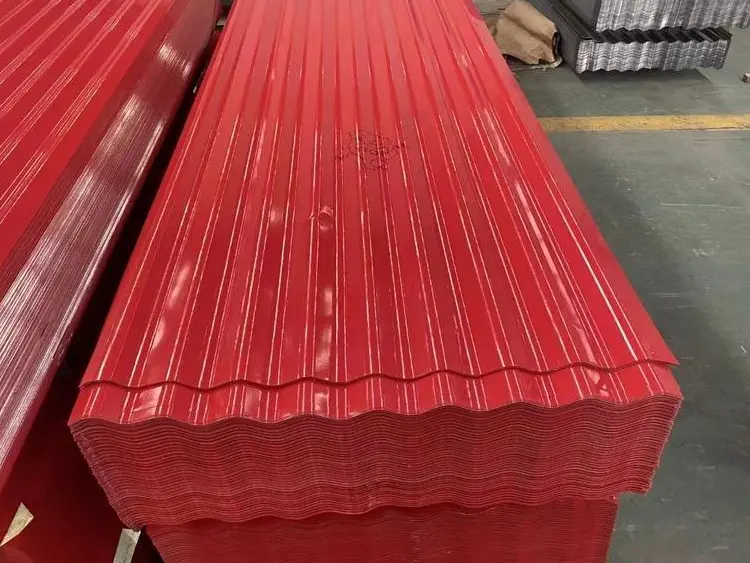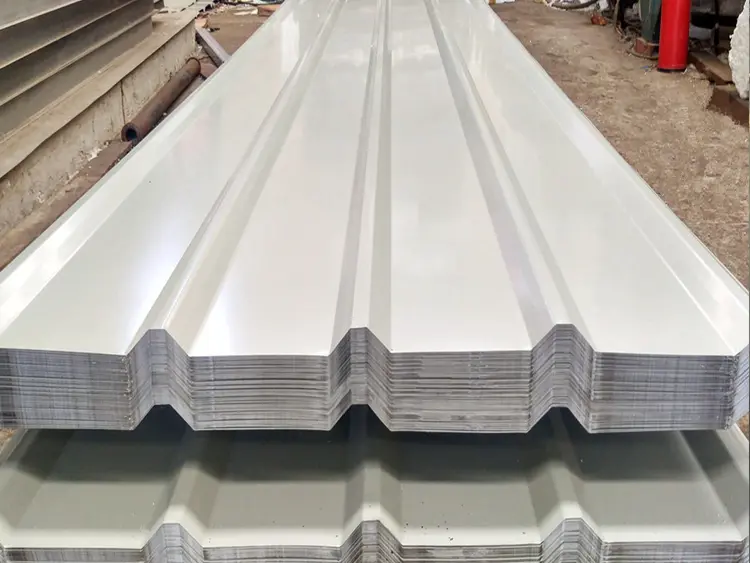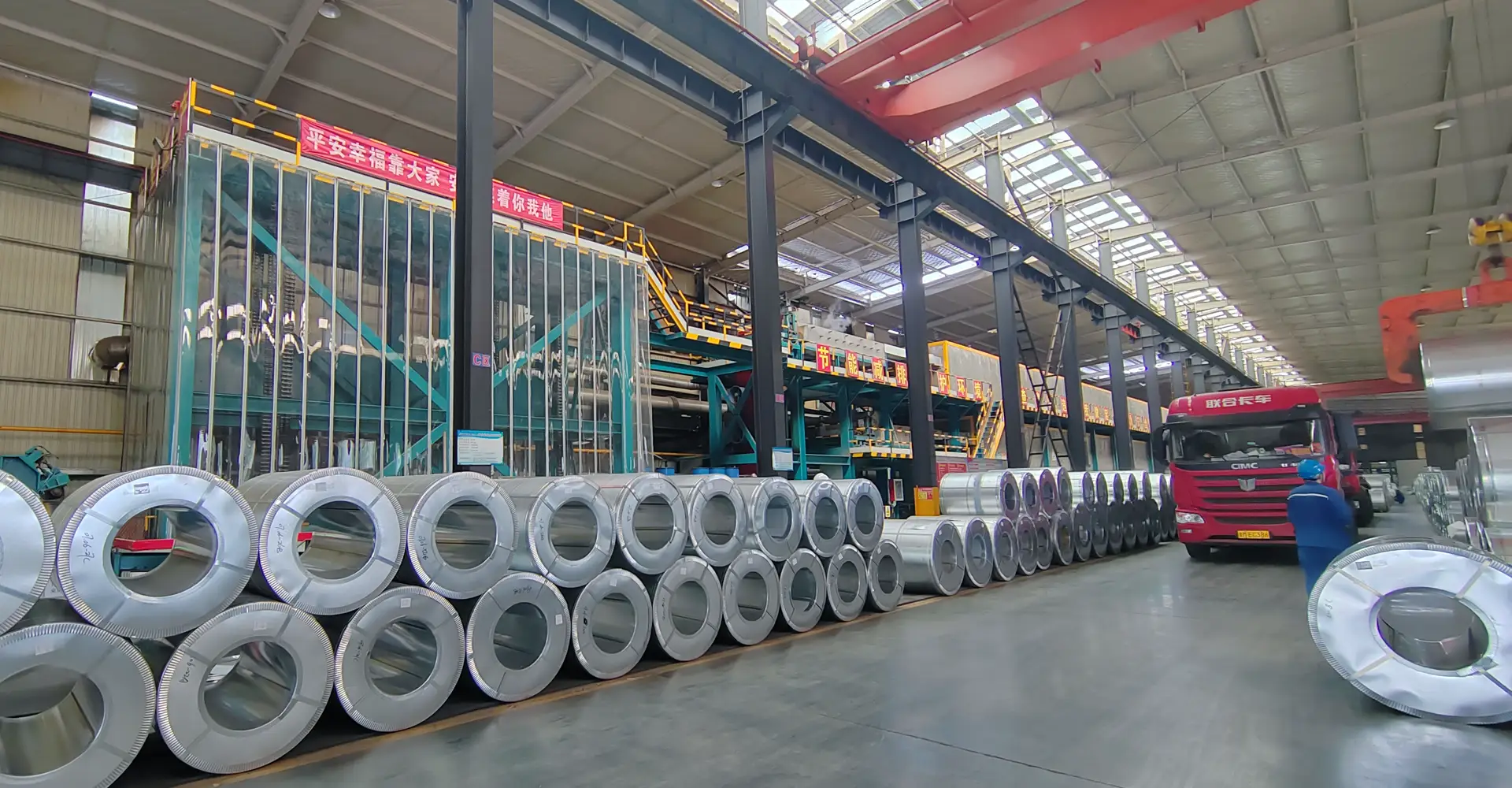
Walk through a hardware market in Lusaka, Harare or Nairobi and you will see two roof profiles stacked side by side. One is the round, wavy sheet everyone calls "corrugated" or mabati. The other has flat pans between tall, trapezoidal ribs and is sold as IBR, short for Inverted Box Rib. Both are rolled from the same galvanized or pre-painted coil, and both sell by the metre. They are not interchangeable on a roof, though, and an importer who orders the wrong mix ends up with stock that moves slowly.
Short answer for busy buyers
| Situation | Usual choice | Main reason |
|---|---|---|
| Low-pitch roof on a warehouse, workshop or shop | IBR | Deep ribs carry rainwater off shallow slopes |
| Rural house, small budget, steep roof | Corrugated | Lowest price per sheet, easy to bend and fit by hand |
| Long spans between purlins | IBR | Trapezoidal ribs are stiffer than shallow waves |
| Curved roofs, verandas, water-tank covers | Corrugated | The sinusoidal wave can be crimp-curved or spring-curved |
| Wall cladding and boundary walls | Either | Mostly a question of local taste |
The rest of this article explains why, and what to specify so that the sheets you land match what your customers already use.
Shape and cover width
Neither profile is fixed by an international standard. Each roll-former publishes its own drawing, so the figures below are the common South African dimensions that most Chinese mills copy for this market. Always ask for the profile drawing before you confirm an order.
| Feature | IBR | Corrugated |
|---|---|---|
| Typical effective cover width | 686 mm | 762 mm |
| Cross-section | Trapezoidal ribs with flat pans | Sinusoidal waves, 76 mm pitch |
| Rib / wave depth | Deep (roughly 25–27 mm on common profiles) | Shallow (around 17–18 mm) |
| Side lap | One rib | Usually one and a half corrugations on roofs |
| Look | Modern, industrial | Traditional |
East African mabati varies more. Local rollers in Kenya, Uganda and Tanzania make several "box profile" and "corrugated" shapes with different cover widths. If you sell into those markets, copy a sheet from your customer's current supplier rather than assuming the South African profile.
Roof pitch and water
The deeper rib is IBR's biggest advantage. On a shallow roof, rain runs in the pans and stays well below the side lap. On corrugated sheet the waves are shallow, so heavy rain on a flat slope can back up over the lap and leak. That is why roll-formers usually publish a lower minimum pitch for IBR than for corrugated sheet. Typical published values are around 5° for IBR and around 10° for corrugated, but the exact number depends on the profile, the sheet length and the lap sealing. Take the figure from the supplier's data sheet and pass it on to your customers.
For long sheets on a low roof, end laps need sealant tape and enough overlap to keep water out. Where possible, order sheets cut to the full rafter length so that there is no end lap at all. A 40-foot container takes sheets up to about 11.8 m long.
Strength, thickness and purlin spacing
For the same base steel thickness, the IBR profile is stiffer. In practice that means wider purlin spacing or better resistance to foot traffic during installation. Corrugated sheet in very thin gauges dents easily when walked on. Contractors work around this by stepping only over the purlins.
Thickness is where many orders go wrong. In Southern Africa, buyers usually quote sheet thickness in millimetres (0.47 mm and 0.5 mm are common requests). In East Africa, the same buyers talk in gauges such as 28, 30 or 32. A gauge is not a precise measurement, and two suppliers can mean different thicknesses by "30 gauge". Always write the thickness in millimetres on the contract, and say whether it is the base metal thickness or the total coated thickness. The difference can be several hundredths of a millimetre and decides whether a sheet passes or fails inspection.
Purlin spacing depends on thickness, profile, wind load and whether the roof will be walked on. Use the roll-former's span table rather than a rule of thumb.
Coating and colour
Both profiles come in plain galvanized (Z coating), aluminium-zinc (AZ, often called Galvalume or Zincalume) and pre-painted colours. The profile does not change the corrosion life. Coating mass and paint system do. Near the coast, ask for a heavier zinc or AZ coating; our article on zinc coatings near the sea explains why coating mass matters more than shine. In Kenya, galvanized corrugated and plain sheets are covered by the East African Standard EAS 11, and importers should check what the local bureau will test before shipment.
Fixing and accessories
- IBR is normally fixed through the crest of the rib with self-drilling screws and sealing washers. This keeps the hole above the water line.
- Corrugated roofs are also fixed through the crest. Valley fixing is used on walls only.
- Ridge caps and flashings are profile-specific. An IBR roof needs IBR-shaped closures or foam fillers at the eaves and ridge to keep out birds, insects and wind-driven rain.
- Order accessories in the same coating and colour, and in the same container, so the roof and its flashings weather alike.
Comparing quotations fairly
Because the two profiles cover different widths, the price per metre of sheet is misleading. Compare price per square metre of roof covered, which is the sheet price divided by the effective cover width. Then check:
- Profile drawing with cover width, rib depth and pitch.
- Base metal thickness in mm and the tolerance.
- Coating type and mass (for example Z120 or AZ150), plus paint system and colour code for coloured sheet.
- Cut lengths, pieces per bundle and bundle weight.
- Packing: plastic film, wooden or steel pallets, and edge protection for long sheets.
- Which accessories are included: ridges, flashings, screws, fillers.
Our corrugated roof sheet and pre-painted corrugated roofing sheet pages list the thickness and coating ranges we supply. Send us a photo or drawing of the profile your market uses, and we can check whether it can be matched.
Frequently asked questions
What does IBR stand for in roofing sheets?
IBR means Inverted Box Rib, a trapezoidal profile with deep ribs and flat pans that is widely used in Southern and East Africa.
Can IBR be used on a lower roof pitch than corrugated sheet?
Yes, its deeper ribs carry water better, so manufacturers usually allow a lower minimum pitch for IBR, but always check the specific profile's data sheet.
Is IBR more expensive than corrugated roofing sheet?
Per metre the prices are often close, so compare cost per square metre of roof covered, because IBR and corrugated sheets have different effective cover widths.
Can corrugated sheet be curved?
Yes, the sinusoidal corrugated profile can be crimp-curved or spring-curved for verandas and arched roofs, while IBR is normally used straight.
Need a quotation?
Send us the size, grade, quantity and destination port — we reply with a CFR/CIF price, usually within 24 hours.