The figure most quantity surveyors carry in their heads is "8 to 10 kg of binding wire per ton of rebar". On some jobs that is close. On a slab of 10 mm bars at 150 mm it can be under half the real need, and on a raft of 20 mm bars it can be three times too much. Binding wire is cheap per kilo, but running out stops a steel-fixing gang, and over-ordering ties up cash in coils that rust in the yard. This guide shows how to calculate the quantity from the drawings instead of guessing.
The quantity comes from ties, not tons
Wire is used at bar intersections, so the number that drives consumption is ties per ton. Thin bars at close spacing create many intersections per ton of steel; heavy bars at wide spacing create few. The calculation has three inputs:
- Number of ties per ton of rebar, from bar size, spacing and how many intersections the engineer wants tied.
- Wire length per tie, which depends on the tie type and on the bar diameters being tied.
- Wire weight per metre, from the gauge: kg per km = d² (mm) × 6.165.
Kg of wire per ton = ties per ton × metres per tie × kg per metre, plus a waste allowance.
Weight per metre of common tie wire
| Gauge | Diameter (mm) | Grams per metre | Typical use |
|---|---|---|---|
| BWG 16 | 1.65 | 16.8 | Heavy bars, cages lifted by crane |
| BWG 18 | 1.24 | 9.5 | Standard hand tying |
| BWG 20 | 0.89 | 4.9 | Light mesh, double-strand ties |
| BWG 21 | 0.81 | 4.1 | Light mesh, tying tools |
The full conversion chart is in our BWG wire gauge guide.
Worked example: a two-way slab mat
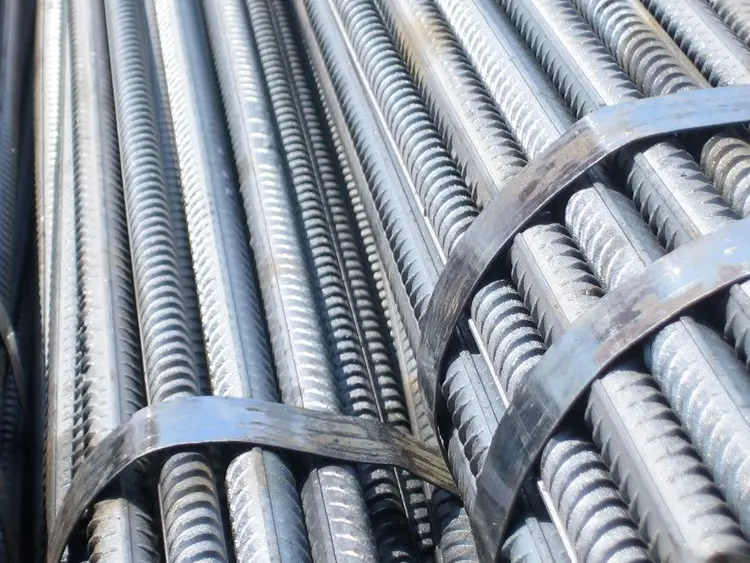
Take one layer of 12 mm bars at 200 mm centres in both directions. Rebar mass is 0.00617 × d² kg/m, the nominal value in GB/T 1499.2 and BS 4449.
- Bars per metre each way: 5, so 10 m of bar per m² of mat
- Steel per m²: 10 × 0.888 = 8.88 kg
- Mat area per ton: 1,000 ÷ 8.88 = 112.6 m²
- Intersections per m²: 5 × 5 = 25, so about 2,815 per ton
If every intersection gets a simple snap tie cut from 300 mm of BWG 18 wire, each tie uses 0.30 × 9.5 = 2.85 g. Tying every intersection needs 2,815 × 2.85 g = about 8.0 kg per ton. Tying alternate intersections halves that to about 4 kg. Here the rule of thumb happens to fit, but only for this layout.
Same method, other layouts
All rows assume a single mat, 300 mm of BWG 18 per tie and no waste. They are calculation results for these assumptions, not values from a standard.
| Bar and spacing | Steel per m² (kg) | Ties per ton | Wire, every crossing (kg/t) | Wire, alternate crossings (kg/t) |
|---|---|---|---|---|
| 10 mm @ 150 | 8.23 | 5,400 | 15.4 | 7.7 |
| 10 mm @ 200 | 6.17 | 4,050 | 11.5 | 5.8 |
| 12 mm @ 150 | 11.85 | 3,750 | 10.7 | 5.3 |
| 12 mm @ 200 | 8.88 | 2,815 | 8.0 | 4.0 |
| 16 mm @ 200 | 15.80 | 1,580 | 4.5 | 2.3 |
| 16 mm @ 250 | 12.64 | 1,270 | 3.6 | 1.8 |
| 20 mm @ 250 | 19.74 | 810 | 2.3 | 1.2 |
Two things change these numbers fast. Larger bars need longer ties: 16 mm and 20 mm crossings tied with 300 mm of wire are tight, so many fixers cut 350–400 mm. And switching to BWG 16 for heavy bars almost doubles the grams per metre. Recalculate with the length and gauge your gang actually uses.
Tie type: the multiplier people forget
- Snap (single) tie: one diagonal wrap, the shortest tie. Common for slab mats where bars are held by chairs.
- Wrap-and-snap or saddle tie: the wire goes around a bar before crossing. It uses more wire per tie but stops bars from rotating, so it is used for walls and vertical mats.
- Figure-eight tie: the strongest hand tie, used where workers walk on the mat or where cages are lifted. Expect roughly double the wire of a snap tie.
- Double strand: many fixers fold the wire and tie with two strands of a thinner gauge, such as BWG 20. Two strands of 0.89 mm weigh about the same as one strand of 1.24 mm, so the kilo figure changes little but the tie is stronger.
Columns, beams and walls deserve a separate count. In a column, every stirrup is tied to each main bar at its corners and often at intermediate bars, so a column cage of 20 mm bars can use more wire per ton than a slab of 16 mm bars. Count stirrups × tied bars per stirrup directly from the bar bending schedule.
From calculation to purchase order
- Split the rebar tonnage by element: slabs, beams, columns, walls, foundations.
- For each element, count or calculate ties per ton from the drawings, and confirm with the engineer which intersections must be tied.
- Multiply by the wire length per tie your fixers use, then by grams per metre for the chosen gauge.
- Add 5–10% for offcuts, dropped ties and wire left at coil ends. Use the higher figure on sites without supervision of cut lengths.
- Round up to whole coils, and keep at least one week of consumption on site.
Buying notes for importers and wholesalers
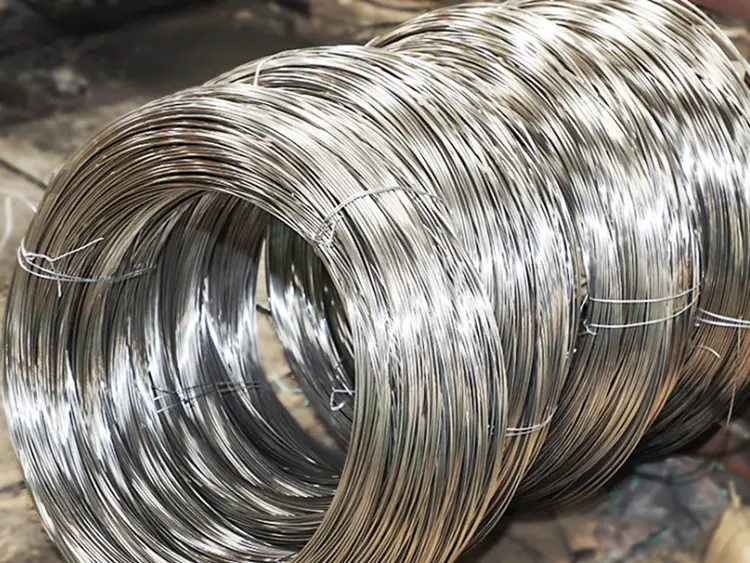
- Soft annealed wire. Tie wire must twist without snapping. Black annealed wire is the usual choice for wire that ends up inside concrete. Electro-galvanized wire stays clean longer in a humid store and is preferred where wire is stocked for months.
- Check metres, not just kilos. A 25 kg coil of BWG 18 should hold about 2,600 m. If the wire is oversize, the kilos are right but the site gets fewer ties.
- Match the coil to the market. Contractors buy 20–25 kg coils; hardware shops sell 1–2 kg rolls. Order the coil weight your customers really ask for.
- Ship it with the steel. Wire coils can fill the space left in a weight-limited rebar container; see our rebar container shipping guide for payload limits.
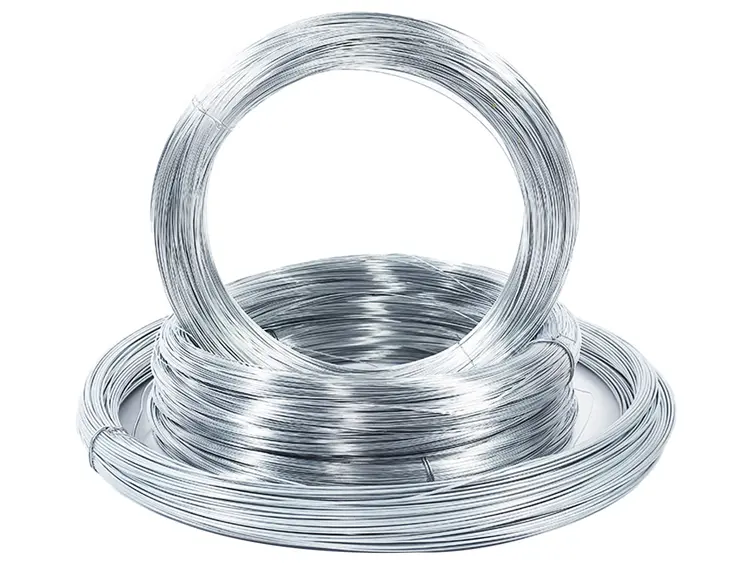
For tie wire from 0.7 mm to 2.5 mm, see our galvanized iron wire range and send your gauge, coil weight and monthly tonnage for a quote.
Frequently asked questions
How many kg of binding wire are needed per ton of rebar?
It depends on bar size and spacing; a 12 mm slab mat at 200 mm with every crossing tied needs about 8 kg per ton of BWG 18, while 20 mm bars at 250 mm need only about 2–3 kg.
Why does thinner rebar need more binding wire per ton?
A ton of thin bars covers a larger area and creates many more intersections, and each intersection needs a tie.
How much wire does one rebar tie use?
A simple snap tie typically uses about 300 mm of wire, which is roughly 3 g of BWG 18; saddle and figure-eight ties use more.
What waste allowance should I add for binding wire?
Add 5–10% to the calculated quantity for offcuts, dropped ties and coil ends.
Need a quotation?
Send us the size, grade, quantity and destination port — we reply with a CFR/CIF price, usually within 24 hours.